




Yes. Stage 4 cancer is a very serious diagnosis, but it is not an individual prognosis and does not determine the date until which a person is supposed to live.
Statistics can be harsh. However, there is no single number that describes the outlook for all patients with Stage 4 cancer. Survival varies significantly depending on the type of cancer, the location of metastases, the biology of the tumor, the person’s overall health, and, very importantly, how the tumor responds to treatment. Survival statistics also cannot predict the future of an individual person.
Therefore, statistics or negative predictions from doctors should not be perceived as a verdict. There are people who live with metastatic cancer for many years, and today, in some patients, advanced cancer can be controlled for a long period of time.
The purpose of this article is not to promise a miracle. Its purpose is quite different: what can a person do themselves, together with professional treatment, to maximize their chances of living longer and with a better quality of life?
Make Your Health the Most Important Project of Your Life
If until now your life has centered around work, business, responsibilities, and caring for others, perhaps it is time to change your priorities.
Your health should become one of the most important projects in your life.
This does not mean that you should stop living. Quite the opposite — the goal is to live. Plan for next summer. A trip. Your children’s or grandchildren’s birthdays. Do the things you have always postponed.
And instead of focusing on negative statistics, you can tell yourself:
“I will do everything reasonably possible to be among the people who live longer.”
However, positive thinking alone is not enough. Stage IV cancer is a biological disease, and fighting it requires a professional medical team, a well-considered treatment strategy, and the patient’s own active participation.
Find a Doctor Who Looks for Possibilities
If the disease is progressing, it is entirely reasonable to seek a second or even a third independent opinion from an oncologist or another specialist, especially at medical centers that have specific experience with your type of tumor.
Ask about specific treatment options, statistical data, clinical trials, and specific examples of successful treatment.
If the disease cannot be controlled over a long period of time, it is reasonable to look for another specialist or another medical center with different experience and a different approach.
Personal Responsibility
The best results can be expected when the patient also actively participates in the treatment process and takes personal responsibility for their health and life.
You do not have to blindly rely on the opinion of only one doctor. Be critical, think for yourself, ask questions, analyze the available information, and make your own informed decisions.
Think About the Whole Person, Not Only the Tumor
An integrative approach means looking more broadly: at the tumor, the physical body, nutrition, sleep, movement, psycho-emotional state, relationships, and quality of life.
This does not contradict medical treatment. Integrative medicine combines standard treatment with complementary methods for which there is scientific evidence regarding safety and effectiveness, or experience based on long-term practice.
Move as Much as Your Body Allows
Physical activity can help preserve muscle mass, functional ability, well-being, and quality of life, as well as help maintain the normal functioning of the body and immune system.
This does not mean that a person with a serious illness must run or work out in a gym. For one person it may be walking, for another swimming, light strength exercises, or yoga. Physical activity should be adapted to the condition of the disease, the location of metastases, and the treatment.
Signal to yourself and to your body that you want to live, and do not allow the disease to completely take away your movement and rhythm of life.
Protect Your Mind as Well
Fear after a Stage IV diagnosis is understandable. However, there is no need to live every day immersed in a constant flow of information about cancer.
It may help to limit social media and content that creates anxiety, and consciously choose people, books, films, and stories that give you strength.
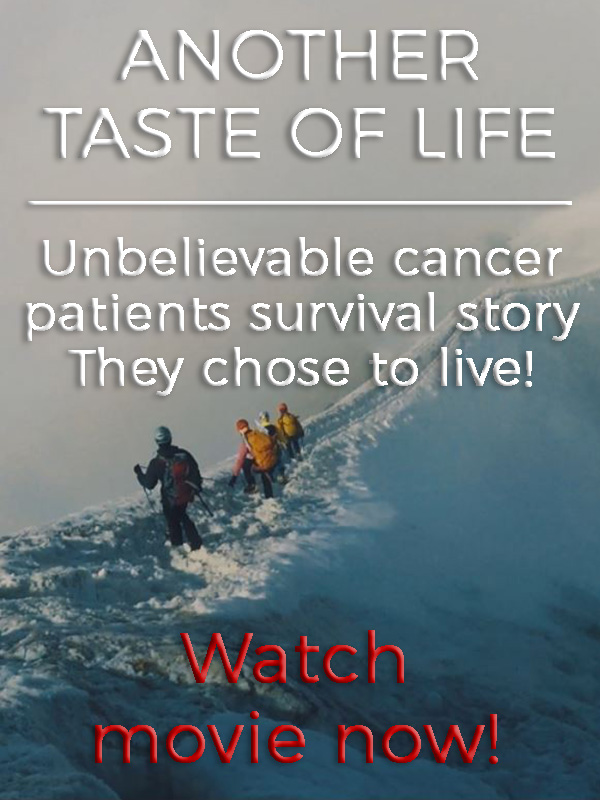
One such example may be the documentary story “Another Taste of Life” about an expedition to Mont Blanc by seriously ill cancer patients. Such stories remind us that even after a serious diagnosis, a person can still set goals, experience life, and live.
Meditation, yoga, nature, prayer, or spiritual practices mean different things to different people. They are not cancer treatments, but they can become part of the way a person regains peace and a sense of meaning in life.
Stay Close to Your Loved Ones
Cancer very quickly shows us what is truly important in life.
Be with your family. Talk. Forgive. Apologize if necessary. Tell people that you love them.
If it helps you to symbolically speak with your illness — do so. You can imagine telling it that it no longer has a place in your body. This is not medical therapy, but for some people it can be a personal psychological or spiritual practice.
Protect and Strengthen Your Immune System
Evaluate which therapies and medications you have used so far and what toxic effect they have on your body and immune system.
Give up harmful habits.
Purposefully take care of your body’s overall condition, sleep, nutrition, movement, and other factors that help preserve the best possible functional reserve of your body.
Nutrition Is Not a Miracle Cure, but It Matters
There is no universal “anti-cancer diet” for Stage IV cancer. However, there are many naturally derived foods that contain biologically active compounds and are being studied in relation to inflammation, oxidative stress, cell growth, and other processes associated with cancer development.
Such foods include broccoli and other cruciferous vegetables — cabbage, cauliflower, Brussels sprouts, and kale — which contain glucosinolates and sulforaphane precursors. Other healthy dietary choices can include garlic and onions, tomatoes, berries, citrus fruits, green leafy vegetables, legumes, nuts and seeds, whole grains, olive oil, fatty fish, as well as spices such as turmeric and ginger.
Good nutrition helps maintain body weight, muscle mass, and energy, which is especially important for a person with advanced disease. During cancer treatment, some patients may even require more protein and calories than usual.
Vitamins and Dietary Supplements
Here too, the principle is: targeted use rather than “the more, the better.”
Vitamins and dietary supplements can be useful, for example, when there is a specific nutrient deficiency or particular nutritional need.
Smart use of dietary supplements can successfully slow cancer development and significantly strengthen the immune system, but it must be understood that vitamins, minerals, dietary supplements, or a special diet on their own cannot cure cancer or reliably stop its progression.
Therefore, when choosing dietary supplements, it is advisable to consult a healthcare professional, especially if anti-cancer medications are being used at the same time.
Biologically Active Anti-Cancer Approaches
One of the most promising directions in the use of biologically active substances in anti-cancer therapies is live viruses.
For example, the oncolytic virus Rigvir, which, when introduced into the human body, is able to find and destroy cancer cells as well as activate the body’s natural anti-cancer activity by mobilizing immune cells that, under the influence of the virus, are able to recognize cancer cells more effectively and independently neutralize them.
The Rigvir virus was discovered in the 1960s and adapted to different cancer cells by scientist Aina Muceniece. It is available in different formats, both as an injectable medicine and as a dietary supplement.
When choosing such an approach, it is essential to consult healthcare professionals.
Alternative and Integrative Medicine
In the treatment of Stage 4 cancer patients, conventional or traditional medicine sometimes chooses not to actively treat patients but instead refers them to palliative care.
Therefore, it is logical and appropriate to seek help from specialists and health centers that practice complementary, alternative, or integrative medicine.
However, the choice should be made carefully. Be especially cautious of specialists who guarantee a cure or claim that one substance or one method treats almost all types of cancer.
Statistics Are Not Your Life Expectancy
A statistical survival rate is not a clock that starts counting down after diagnosis.
It is a population-based statistical tool.
You are not the average statistical patient.
Your tumor has its own biology. Your body is individual. Your response to treatment may be different. And treatment options continue to evolve.
Therefore, after a Stage IV diagnosis, the question is not only:
“How much time do I have?”
An equally important question is:
“What can I do today to increase my chances and live this time as fully as possible?”
Keep hope, but base it on action. Look for progressive and courageous healthcare professionals. Get a second opinion. Explore your treatment options. Take care of your body and mind. Be with the people you love. And do not allow statistics to become your personal prognosis.
We wish you not only to exceed the statistics, but also to live a long life with the best possible quality of life.
Can You Survive Stage 4 Cancer?